
Directors · CAPRA Dossier

Andrew Stanton
2003–2026 · 6 scored directed films · Boston, Massachusetts, USA
Andrew Ayers Stanton (born December 3, 1965) is an American filmmaker, animator, and voice actor. He is best known as the director and co-writer of the Pixar animated films Finding Nemo (2003), WALL-E (2008), Finding Dory (2016), and Toy Story 5 (2026). He also directed the live-action films John Carter (2012) and In the Blink of an Eye (2026). For Pixar, Stanton was additionally a co-writer on the first five Toy Story films (1995–2026), A Bug's Life (1998), and Monsters, Inc. (2001), and has had some involvement in each of the company's feature films. Finding Nemo and WALL-E earned Stanton two Academy Awards for Best Animated Feature. He was also nominated for three Academy Awards for Best Original Screenplay, for Finding Nemo, WALL-E, and Toy Story (1995), and for an Academy Award for Best Adapted Screenplay for Toy Story 3 (2010). WALL-E has also been inducted into the National Film Registry. Stanton has directed episodes of various television series since 2017, including 3 Body Problem, Better Call Saul, Legion, and Stranger Things. Description above from the Wikipedia article Andrew Stanton, licensed under CC-BY-SA, full list of contributors on Wikipedia.
Directing Filmography (6 of 6 counted)
| Count | Film | Awards | ||||||||
|---|---|---|---|---|---|---|---|---|---|---|
| 2003 | 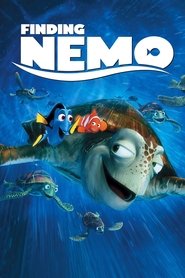 Finding NemoAnimation · Family · Adventure | — | $718M | 99% | 90 | 82 | ||||
| 2016 | 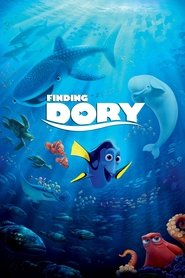 Finding DoryAdventure · Animation · Family | — | $655M | 94% | 77 | 72 | ||||
| 2008 |  WALL·EAnimation · Family · Sci-Fi | — | $346M | 95% | 95 | 84 | ||||
| 2026 |  Toy Story 5Animation · Family · Comedy | — | $480M | 92% | 73 | 74 | ||||
| 2012 |  John CarterAction · Adventure · Sci-Fi | — | $106M | 52% | 51 | 66 | ||||
| 2026 |  In the Blink of an EyeSci-Fi · Drama | — | — | — | 37 | 61 |
How we measure: Only released feature films (40+ minutes) are counted — video box sets, compilations, shorts, documentaries, and upcoming releases are excluded unless award-recognized. Box office is the domestic (US & Canada) theatrical gross, and PACINO always adjusts it to 2026 dollars using historical US Bureau of Labor Statistics CPI-U annual averages (1913–2026) so stars from every era compete on equal footing. Overseas earnings are not counted, which can undersell stars whose biggest hits played mainly abroad. Reception blends critics (75% Metacritic, 25% Rotten Tomatoes, with RT-only films calibrated to that same blend) 50/50 with fans (IMDb user ratings). Click any film's PACINO score for its full breakdown. Figures come from public sources and can be incomplete, especially for older, foreign and smaller releases.