
Directors · CAPRA Dossier
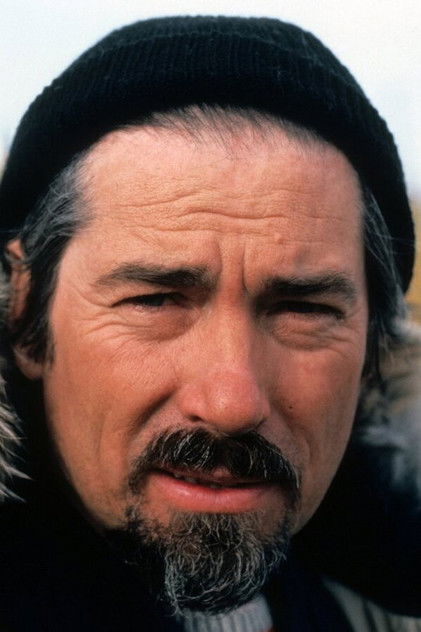
Carroll Ballard
1979–2005 · 6 scored directed films · Los Angeles, California, USA
From Wikipedia, the free encyclopedia Carroll Ballard (born October 14, 1937, in Los Angeles) is an American film director. He started out making documentaries for the U.S. information agency, Beyond This Winter's Wheat (1965) and Harvest (1967); the latter was nominated for an Academy Award. He also made the documentaries The Perils of Priscilla (1969), and Rodeo (1970). He was second unit director on George Lucas' Star Wars for which he handled many of the outdoor desert scenes. His first solo directing job came when Francis Ford Coppola, a former UCLA classmate, offered him the job of directing The Black Stallion (1979), an adaptation from the novel of the same name by Walter Farley. He went on to direct Never Cry Wolf (1983), a film based on Farley Mowat's autobiographical book of the same name, detailing his experiences with Arctic wolves. He also directed the film Wind (1992). He later directed the film Fly Away Home (1996), which was nominated for an Academy Award for best cinematography. His most recent film is Duma (2005), about a young South African boy's friendship with an orphaned cheetah. Most of Ballard's films deal with man and his relation to nature and have a strong poetic streak. Description above from the Wikipedia article Carroll Ballard, licensed under CC-BY-SA, full list of contributors on Wikipedia.
Directing Filmography (6 of 6 counted)
| Count | Film | Awards | ||||||||
|---|---|---|---|---|---|---|---|---|---|---|
| 1979 |  The Black StallionFamily · Adventure | — | $173M | 90% | 84 | 74 | ||||
| 1983 |  Never Cry WolfAdventure · Drama · Action | — | $99M | — | — | 75 | ||||
| 1996 |  Fly Away HomeAdventure · Drama · Family | — | $53M | 87% | 77 | 69 | ||||
| 2005 |  DumaAdventure · Drama · Family | — | $2M | — | 82 | 71 | ||||
| 1986 |  Nutcracker: The Motion PictureFamily · Fantasy · Music | — | $2M | — | — | 68 | ||||
| 1992 |  WindAction · Drama | — | $13M | 46% | 57 | 65 |
How we measure: Only released feature films (40+ minutes) are counted — video box sets, compilations, shorts, documentaries, and upcoming releases are excluded unless award-recognized. Box office is the domestic (US & Canada) theatrical gross, and PACINO always adjusts it to 2026 dollars using historical US Bureau of Labor Statistics CPI-U annual averages (1913–2026) so stars from every era compete on equal footing. Overseas earnings are not counted, which can undersell stars whose biggest hits played mainly abroad. Reception blends critics (75% Metacritic, 25% Rotten Tomatoes, with RT-only films calibrated to that same blend) 50/50 with fans (IMDb user ratings). Click any film's PACINO score for its full breakdown. Figures come from public sources and can be incomplete, especially for older, foreign and smaller releases.