
Directors · CAPRA Dossier
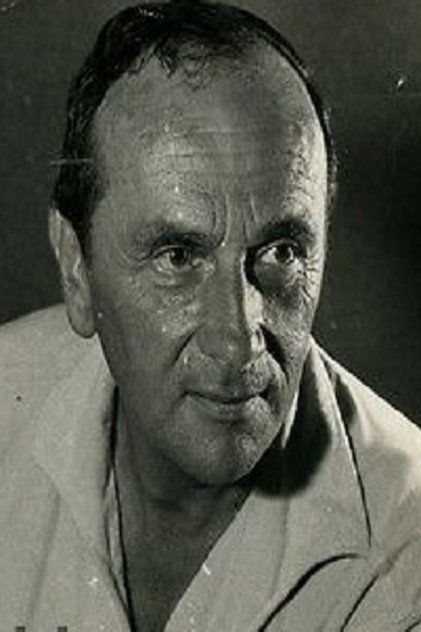
Edmond T. Gréville
1935–1963 · 17 scored directed films · Nice, France
From Wikipedia, the free encyclopedia. Edmond T. Gréville (real name Edmond Gréville Thonger, 20 June 1906 Nice – 26 May 1966, Nice) was a French film director. The son of Franco-British parents, his father a Protestant pastor, Gréville began his career as a film journalist and critic. In parallel with a few acting performances in some silent films and in the first talkie of René Clair, Sous les toits de Paris (1930), he directed his first short films. His first experience of directing had been on the shooting of Abel Gance's Napoléon in 1927. He had then worked as an assistant director, notably on the English film Piccadilly, L'Arlésienne (directed by Jacques de Baroncelli), Augusto Genina's Prix de beauté ( with Louise Brooks) and Abel Gance's La Fin du Monde. Between 1930 and 1940 he directed several French films - Le Train des suicidés (1931), Remous (1934) with Françoise Rosay (a social-realist film on the sensitive sexual issue of impotence), and two comedy musical films Princesse Tam Tam (1935) with Josephine Baker, and Gypsy Melody (1936), with Lupe Velez. In Britain again, he filmed Mademoiselle Docteur with Dita Parlo and John Loder, and Menaces (1938) with Mireille Balin and Erich von Stroheim, playing an Austrian refugee who commits suicide following the Anschluss. With a heavy atmosphere charged with eroticism which characterises his films, Gréville imposed his independence and original style on the cinema of the time. He stopped directing films during the Second World War and the Occupation - xenophobia and anti-Semitism ruined or put a stop to some careers, among film-makers those of Léonide Moguy and Pierre Chenal for example, both French Jews, and the half-British Gréville, and took away production and distribution companies belonging to Jews like the father and son distributors Siriztky. In 1948 he made a film on the subject of resistance and collaboration in the Dutch film Niet tevergeefs. The same year he made a film with Carole Landis, Noose. In Le Port du désir (1954) he directed Jean Gabin as a captain confronted by an unscrupulous smuggler and torn by his love for a young woman who is also loved by a younger man. In Gréville's last years he made Beat Girl (1959) with Adam Faith and a horror film The Hands of Orlac (1960) with Mel Ferrer. His last film was L'Accident (1963) with Magali Noël based on a Frédéric David novel. In May 1966, Edmond Greville died in hospital in Nice, thought to be the result of complications following a car accident. Description above from the Wikipedia article Edmond T. Gréville, licensed under CC-BY-SA,full list of contributors on Wikipedia.
Directing Filmography (17 of 17 counted)
| Count | Film | Awards | ||||||||
|---|---|---|---|---|---|---|---|---|---|---|
| 1935 | 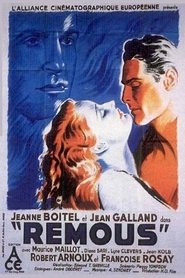 WhirlpoolDrama · Romance | — | — | — | — | 70 | ||||
| 1959 |  TemptationDrama | — | — | — | — | 69 | ||||
| 1947 | 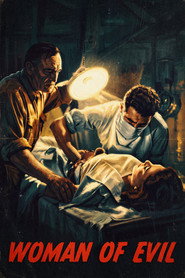 Woman of EvilDrama | — | — | — | — | 69 | ||||
| 1947 |  PassionnelleRomance · Drama | — | — | — | — | 67 | ||||
| 1963 |  The AccidentDrama | — | — | — | — | 66 | ||||
| 1940 | 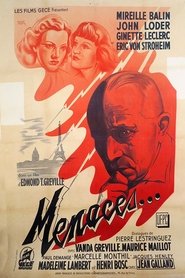 ThreatsDrama · War | — | — | — | — | 66 | ||||
| 1935 |  Princess Tam TamDrama · Comedy · Romance | — | — | — | — | 63 | ||||
| 1955 |  House on the WaterfrontDrama | — | — | — | — | 62 | ||||
| 1948 |  NooseCrime · Drama | — | — | — | — | 62 | ||||
| 1937 | 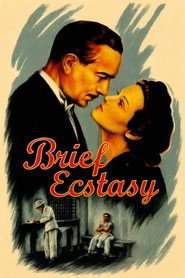 Brief EcstasyRomance · Drama | — | — | — | — | 62 | ||||
| 1937 |  Secret LivesDrama | — | — | — | — | 61 | ||||
| 1949 |  The Romantic AgeComedy | — | — | — | — | 60 | ||||
| 1960 |  Beat GirlDrama | — | — | — | — | 59 | ||||
| 1956 |  Guilty?Drama | — | — | — | — | 59 | ||||
| 1958 |  When Will It Strike NoonDrama | — | — | — | — | 57 | ||||
| 1960 | 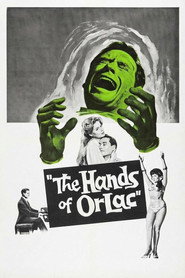 The Hands of OrlacHorror · Crime · Thriller | — | — | — | — | 56 | ||||
| 1955 | 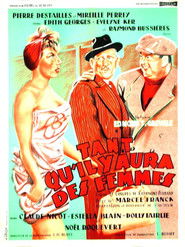 Tant qu'il y aura des femmesComedy | — | — | — | — | 31 |
How we measure: Only released feature films (40+ minutes) are counted — video box sets, compilations, shorts, documentaries, and upcoming releases are excluded unless award-recognized. Box office is the domestic (US & Canada) theatrical gross, and PACINO always adjusts it to 2026 dollars using historical US Bureau of Labor Statistics CPI-U annual averages (1913–2026) so stars from every era compete on equal footing. Overseas earnings are not counted, which can undersell stars whose biggest hits played mainly abroad. Reception blends critics (75% Metacritic, 25% Rotten Tomatoes, with RT-only films calibrated to that same blend) 50/50 with fans (IMDb user ratings). Click any film's PACINO score for its full breakdown. Figures come from public sources and can be incomplete, especially for older, foreign and smaller releases.