
Directors · CAPRA Dossier
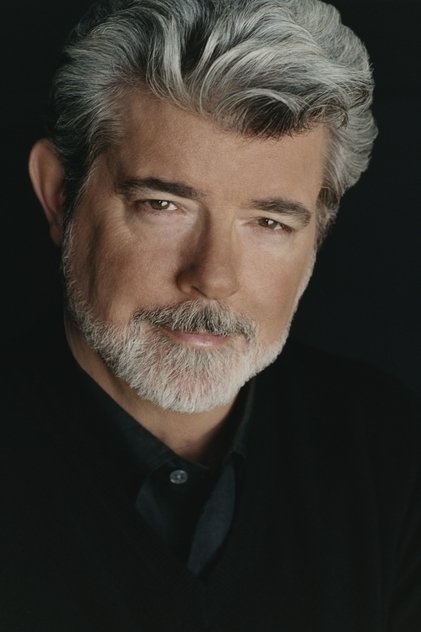
George Lucas
1971–2005 · 6 scored directed films · Modesto, California, USA
George Walton Lucas Jr. (born May 14, 1944) is an American filmmaker and entrepreneur. Lucas is known for creating the Star Wars and Indiana Jones franchises and founding Lucasfilm, LucasArts and Industrial Light & Magic. He served as chairman of Lucasfilm before selling it to The Walt Disney Company in 2012. After graduating from the University of Southern California in 1967, Lucas co-founded American Zoetrope with filmmaker Francis Ford Coppola. Lucas wrote and directed THX 1138 (1971), based on his earlier student short Electronic Labyrinth: THX 1138 4EB, which was a critical success but a financial failure. His next work as a writer-director was the film American Graffiti (1973), inspired by his youth in early 1960s Modesto, California, and produced through the newly founded Lucasfilm. The film was critically and commercially successful, and received five Academy Award nominations including Best Picture. Lucas's next film, the epic space opera Star Wars (1977), had a troubled production but was a surprise hit, becoming the highest-grossing film at the time, winning six Academy Awards and sparking a cultural phenomenon. Lucas produced and co-wrote the sequels The Empire Strikes Back (1980) and Return of the Jedi (1983). With director Steven Spielberg, he created, produced and co-wrote the Indiana Jones films Raiders of the Lost Ark (1981), Temple of Doom (1984), The Last Crusade (1989) and Kingdom of the Crystal Skull (2008). He also produced and wrote a variety of films and television series through Lucasfilm between the 1970s and the 2010s. In 1997, Lucas rereleased the Star Wars trilogy as part of a special edition featuring several alterations; home media versions with further changes were released in 2004 and 2011. He returned to directing with a Star Wars prequel trilogy comprising The Phantom Menace (1999), Attack of the Clones (2002), and Revenge of the Sith (2005). He last collaborated on the CGI-animated television series Star Wars: The Clone Wars (2008–2014, 2020), the war film Red Tails (2012), and the CGI film Strange Magic (2015). Lucas is one of history's most financially successful filmmakers and has been nominated for four Academy Awards. His films are among the 100 highest-grossing movies at the North American box office, adjusted for ticket-price inflation. Lucas is considered a significant figure of the 20th-century New Hollywood movement. Description above from the Wikipedia article George Lucas, licensed under CC-BY-SA, full list of contributors on Wikipedia.
Directing Filmography (6 of 6 counted)
| Count | Film | Awards | ||||||||
|---|---|---|---|---|---|---|---|---|---|---|
| 1977 | 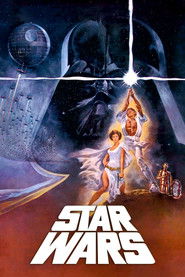 Star WarsAdventure · Action · Sci-Fi | 🏆Dir. OscarNom🎬Best PictureNom🌐Golden GlobeNom🎥DGANom | $2.08B | 93% | 90 | 86 | ||||
| 1973 |  American GraffitiComedy · Drama | 🏆Dir. OscarNom🎬Best PictureNom🌐Golden GlobeNom🎥DGANom | $766M | 95% | 97 | 74 | ||||
| 2005 | 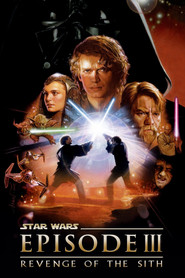 Star Wars: Episode III - Revenge of the SithAdventure · Action · Sci-Fi | — | $726M | 79% | 68 | 77 | ||||
| 1999 | 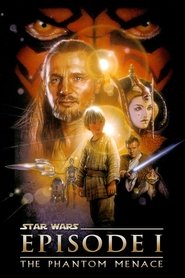 Star Wars: Episode I - The Phantom MenaceAdventure · Action · Sci-Fi | 🍓RazzieNom | $1.07B | 54% | 51 | 65 | ||||
| 2002 | 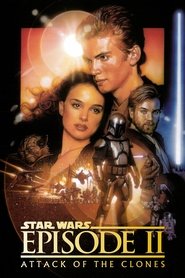 Star Wars: Episode II - Attack of the ClonesAdventure · Action · Sci-Fi | 🍓RazzieNom | $623M | 62% | 54 | 66 | ||||
| 1971 |  THX 1138Sci-Fi · Drama | — | $20M | 72% | 75 | 66 |
How we measure: Only released feature films (40+ minutes) are counted — video box sets, compilations, shorts, documentaries, and upcoming releases are excluded unless award-recognized. Box office is the domestic (US & Canada) theatrical gross, and PACINO always adjusts it to 2026 dollars using historical US Bureau of Labor Statistics CPI-U annual averages (1913–2026) so stars from every era compete on equal footing. Overseas earnings are not counted, which can undersell stars whose biggest hits played mainly abroad. Reception blends critics (75% Metacritic, 25% Rotten Tomatoes, with RT-only films calibrated to that same blend) 50/50 with fans (IMDb user ratings). Click any film's PACINO score for its full breakdown. Figures come from public sources and can be incomplete, especially for older, foreign and smaller releases.