
Directors · CAPRA Dossier

Henri Colpi
1961–1973 · 5 scored directed films · Brig, Valais, Switzerland
Henri Colpi (French: [kɔlpi]; 15 July 1921 – 14 January 2006) was a French film editor and film director. Colpi graduated from the IDHEC in 1947. During 1950 to 1960, he edited films for such notable French New Wave directors as Agnès Varda and Georges Franju. Colpi directed the 1961 film Une aussi longue absence, which is well known for sharing the Palme d'Or at the 1961 Cannes Film Festival with Viridiana, directed by Luis Buñuel. Une aussi longue absence was written by Marguerite Duras, featured Alida Valli in a major role, and included music by Georges Delerue. It also won the Louis Delluc Prize in 1960. His second feature Codine was also screening in competition at the 1963 Cannes Film Festival, where Colpi won the prize for Best Screenplay. Colpi is also noted as a film editor with about 20 credits, including Alain Resnais' films Hiroshima mon amour (1959) and L'Année dernière à Marienbad (1961). He edited André Antoine's forgotten film L'Hirondelle et la Mésange (The Swallow and the Titmouse) to a 79-minute feature that premiered in 1984. Antoine initially shot six hours of footage. In addition to directing, editing, acting, sound recording, and a variety of functions in the post-War years, he was featured in a French television series, L'Histoire du cinéma français par ceux qui l'ont fait (The History of French Cinema By Those Who Made It) in 1974, and he continued to work into the 1990s.
Directing Filmography (5 of 5 counted)
| Count | Film | Awards | ||||||||
|---|---|---|---|---|---|---|---|---|---|---|
| 1966 |  The Nameless StarDrama · Romance | — | — | — | — | 80 | ||||
| 1963 | 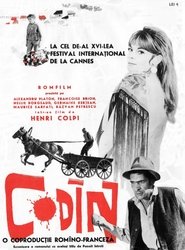 CodineDrama | — | — | — | — | 79 | ||||
| 1961 | 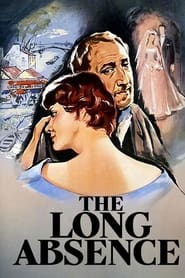 The Long AbsenceDrama | — | — | — | — | 69 | ||||
| 1970 |  Happy He Who Like UlyssesComedy | — | — | — | — | 67 | ||||
| 1973 |  The Mysterious IslandSci-Fi · Adventure | — | — | — | — | 58 |
How we measure: Only released feature films (40+ minutes) are counted — video box sets, compilations, shorts, documentaries, and upcoming releases are excluded unless award-recognized. Box office is the domestic (US & Canada) theatrical gross, and PACINO always adjusts it to 2026 dollars using historical US Bureau of Labor Statistics CPI-U annual averages (1913–2026) so stars from every era compete on equal footing. Overseas earnings are not counted, which can undersell stars whose biggest hits played mainly abroad. Reception blends critics (75% Metacritic, 25% Rotten Tomatoes, with RT-only films calibrated to that same blend) 50/50 with fans (IMDb user ratings). Click any film's PACINO score for its full breakdown. Figures come from public sources and can be incomplete, especially for older, foreign and smaller releases.