
Directors · CAPRA Dossier

Philip Dunne
1955–1966 · 9 scored directed films · New Rochelle, New York, USA
Philip Ives Dunne (February 11, 1908 – June 2, 1992) was an American screenwriter, film director and producer, who worked prolifically from 1932 until 1965. He spent the majority of his career at 20th Century Fox. He crafted well regarded romantic and historical dramas, usually adapted from another medium. Dunne was a leading Screen Writers Guild organizer and was politically active during the "Hollywood Blacklist" episode of the 1940s–1950s. He is best known for the films How Green Was My Valley (1941), The Ghost and Mrs. Muir (1947), The Robe (1953) and The Agony and the Ecstasy (1965).[1] Dunne received two Academy Award nominations for screenwriting: How Green Was My Valley (1941) and David and Bathsheba (1951). He also received a Golden Globe nomination for his 1965 screen adaptation of Irving Stone's novel The Agony and the Ecstasy, as well as several peer awards from the Writers Guild of America (WGA), including the Laurel Award for Screenwriting Achievement. Many notable directors worked with Dunne's screenplays, including Carol Reed, John Ford, Jacques Tourneur, Elia Kazan, Otto Preminger, Joseph L. Mankiewicz, and Michael Curtiz, among others.
Directing Filmography (9 of 9 counted)
| Count | Film | Awards | ||||||||
|---|---|---|---|---|---|---|---|---|---|---|
| 1958 |  Ten North FrederickRomance · Drama | — | — | — | — | 68 | ||||
| 1956 |  Three Brave MenDrama | — | — | — | — | 68 | ||||
| 1962 | 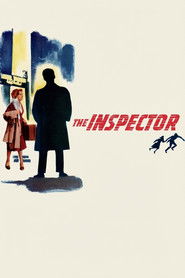 The InspectorDrama · Romance | — | — | — | — | 67 | ||||
| 1955 |  Prince of PlayersDrama | — | — | — | — | 67 | ||||
| 1959 |  Blue DenimDrama · Romance | — | — | — | — | 66 | ||||
| 1956 | 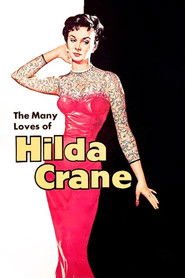 Hilda CraneDrama | — | — | — | — | 63 | ||||
| 1955 |  The View from Pompey's HeadDrama | — | — | — | — | 63 | ||||
| 1966 |  BlindfoldComedy · Romance · Thriller | — | — | — | — | 62 | ||||
| 1961 |  Wild in the CountryDrama | — | — | 50% | — | 63 |
How we measure: Only released feature films (40+ minutes) are counted — video box sets, compilations, shorts, documentaries, and upcoming releases are excluded unless award-recognized. Box office is the domestic (US & Canada) theatrical gross, and PACINO always adjusts it to 2026 dollars using historical US Bureau of Labor Statistics CPI-U annual averages (1913–2026) so stars from every era compete on equal footing. Overseas earnings are not counted, which can undersell stars whose biggest hits played mainly abroad. Reception blends critics (75% Metacritic, 25% Rotten Tomatoes, with RT-only films calibrated to that same blend) 50/50 with fans (IMDb user ratings). Click any film's PACINO score for its full breakdown. Figures come from public sources and can be incomplete, especially for older, foreign and smaller releases.