
Directors · CAPRA Dossier

Romain Gary
1968–1971 · 2 scored directed films · Vilna, Russian Empire [now Vilnius, Lithuania]
Romain Gary (21 May [O.S. 8 May] 1914 – 2 December 1980), born Roman Kacew, and also known by the pen name Émile Ajar), was a French novelist, diplomat, film director, and World War II aviator. He is the only author to have won the Prix Goncourt under two names. He is considered a major writer of French literature of the second half of the 20th century. He was married to Lesley Blanch, then Jean Seberg. Gary was born Roman Kacew (Yiddish: רומן קצב Roman Katsev, Russian: Рома́н Ле́йбович Ка́цев, Roman Leibovich Katsev) in Vilnius (at that time in the Russian Empire). In his books and interviews, he presented many different versions of his parents' origins, ancestry, occupation and his own childhood. His mother, Mina Owczyńska (1879—1941), was a Jewish actress from Švenčionys (Svintsyán) and his father was a businessman named Arieh-Leib Kacew (1883—1942) from Trakai (Trok), also a Lithuanian Jew. The couple broke in 1925 and Arieh-Leib remarried. Gary later claimed that his actual father was the celebrated actor and film star Ivan Mosjoukine, with whom his actress mother had worked and to whom he bore a striking resemblance. Mosjoukine appears in his memoir Promise at Dawn. Deported to central Russia in 1915, they stayed in Moscow until 1920. They later returned to Vilnius, then moved on to Warsaw. When Gary was fourteen, he and his mother emigrated illegally to Nice, France. Converted to Catholicism by his mother, Gary studied law, first in Aix-en-Provence and then in Paris. He learned to pilot an aircraft in the French Air Force in Salon-de-Provence and in Avord Air Base, near Bourges. ... Source: Article "Romain Gary" from Wikipedia in English, licensed under CC-BY-SA 3.0.
Directing Filmography (2 of 2 counted)
| Count | Film | Awards | ||||||||
|---|---|---|---|---|---|---|---|---|---|---|
| 1971 |  Kill!Crime · Action · Thriller | — | — | — | — | 48 | ||||
| 1968 | 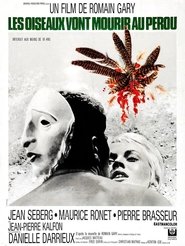 Birds in PeruDrama | — | — | — | — | 48 |
How we measure: Only released feature films (40+ minutes) are counted — video box sets, compilations, shorts, documentaries, and upcoming releases are excluded unless award-recognized. Box office is the domestic (US & Canada) theatrical gross, and PACINO always adjusts it to 2026 dollars using historical US Bureau of Labor Statistics CPI-U annual averages (1913–2026) so stars from every era compete on equal footing. Overseas earnings are not counted, which can undersell stars whose biggest hits played mainly abroad. Reception blends critics (75% Metacritic, 25% Rotten Tomatoes, with RT-only films calibrated to that same blend) 50/50 with fans (IMDb user ratings). Click any film's PACINO score for its full breakdown. Figures come from public sources and can be incomplete, especially for older, foreign and smaller releases.