
Directors · CAPRA Dossier

William Girdler
1972–1978 · 9 scored directed films · Louisville, Kentucky
From Wikipedia, the free encyclopedia. William Girdler (October 22, 1947 - January 21, 1978) was an American filmmaker. In a span of seven years, from 1972 to 1978, he directed nine feature films in such genres as horror and action. Girdler also wrote and produced three of his features, Abby, Sheba, Baby and The Manitou. Girdler, born in Louisville, Kentucky started Studio One Productions in his early twenties, and directed his first feature a low-budget film entitled Asylum of Satan which was briefly released to theaters. Girdler's second effort was a gory, if overlong slasher thriller entitled Three on a Meathook. Both Asylum of Satan and Three on a Meathook were filmed in his home town, and although both films received little notice, the films got the attention of Samuel Z. Arkoff and American International Pictures (AIP). Girdler next directed three "blaxploitation" films. The first, in 1973, was a long lost thriller titled The Zebra Killer starring Austin Stoker. By coincidence, another Louisville native, Rich Miles, appeared in this picture in a small role as the local cop who discovers some of the bodies. Girdler's next feature was an Exorcist clone titled Abby with Carol Speed in the lead role and co-starring William H. Marshall (from Blacula) and Oscar nominee Juanita Moore. Abby became Girdler's breakthrough film. The picture opened in 1974 to major box office success, earning nearly $9 million. Warner Brothers thought Abby was too derivative of Exorcist and the film was suddenly pulled from theaters after two weeks. The last "blaxploitation" film Girdler directed was the Pam Grier vehicle Sheba, Baby and his first effort in the action genre. Sheba, Baby was another major hit in theaters, even though it is often cited as one of Pam Grier's more weaker vehicles than her other similar themed action films Coffy and Foxy Brown. Girdler was then finished with his contract with Arkoff and AIP. Girdler's sixth feature was another action themed film starring Leslie Nielsen, in one of his more serious roles as an agent tracked by the government in the political thriller Project: Kill, which was given a limited theatrical release. Grizzly, released in 1976, was Girdler's most financially successful film. A Jaws clone from start to finish, the film was about an oversized grizzly bear terrorizing a National Park. The movie starred Christopher George, Andrew Prine and Richard Jaeckel and went on to become one of the most successful motion pictures of the year, earning an impressive $39 million worldwide. After this triumph, Grizzly's producer and distributor, Edward L. Montoro and Film Ventures International decided to keep the financial profits. Girdler (and the film's screenwriters/producers Harvey Flaxman and David Sheldon, who also worked with Girdler on previous films) sued Montoro and Film Ventures to have the profits returned. Girdler directed The Day of the Animals, another effort for Montoro which is sometimes cited as a sequel to Grizzly. The film had an all-star cast including Christopher George, Leslie Nielsen, Richard Jaeckel, Ruth Roman and Lynda Day George. It was Girdler's second approach to nature-versus-man films, but was not as successful as Grizzly. The Manitou was the last film directed by Girdler. Based on a best selling novel by Graham Masterton, and starring Tony Curtis and Susan Strasberg, The Manitou was perhaps Girdler's most expensive production. It was acquired by AVCO Embassy Pictures and released in 1978 and was also a major hit in theaters. He was killed in a helicopter crash in Manila, Philippines on January 21, 1978, while scouting locations for his tenth film project. Description above from the Wikipedia article William Girdler, licensed under CC-BY-SA, full list of contributors on Wikipedia.
Directing Filmography (9 of 9 counted)
| Count | Film | Awards | ||||||||
|---|---|---|---|---|---|---|---|---|---|---|
| 1974 | 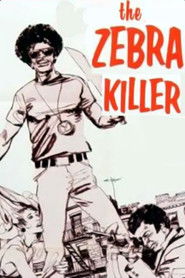 The Zebra KillerAction · Crime | — | — | — | — | 58 | ||||
| 1975 | 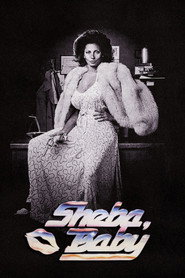 Sheba, BabyAction · Drama · Thriller | — | — | — | — | 57 | ||||
| 1974 | 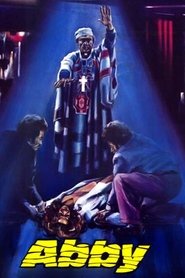 AbbyHorror | — | — | — | — | 55 | ||||
| 1978 | 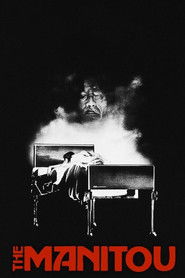 The ManitouHorror · Sci-Fi | — | — | 45% | 47 | 53 | ||||
| 1977 | 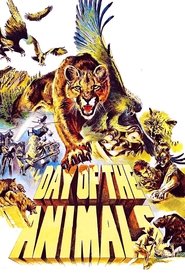 Day of the AnimalsSci-Fi · Horror | — | — | 40% | — | 53 | ||||
| 1972 | 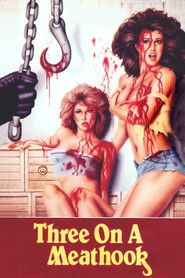 Three on a MeathookHorror | — | — | — | — | 44 | ||||
| 1976 |  GrizzlyHorror · Adventure · Thriller | — | — | 45% | 25 | 52 | ||||
| 1972 |  Asylum of SatanHorror | — | — | — | — | 40 | ||||
| 1976 | 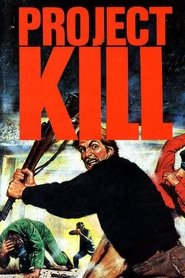 Project: KillAction · Drama | — | — | — | — | 38 |
How we measure: Only released feature films (40+ minutes) are counted — video box sets, compilations, shorts, documentaries, and upcoming releases are excluded unless award-recognized. Box office is the domestic (US & Canada) theatrical gross, and PACINO always adjusts it to 2026 dollars using historical US Bureau of Labor Statistics CPI-U annual averages (1913–2026) so stars from every era compete on equal footing. Overseas earnings are not counted, which can undersell stars whose biggest hits played mainly abroad. Reception blends critics (75% Metacritic, 25% Rotten Tomatoes, with RT-only films calibrated to that same blend) 50/50 with fans (IMDb user ratings). Click any film's PACINO score for its full breakdown. Figures come from public sources and can be incomplete, especially for older, foreign and smaller releases.