
Biography
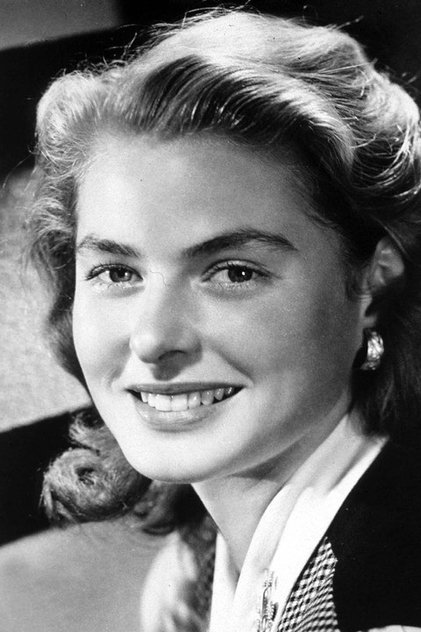
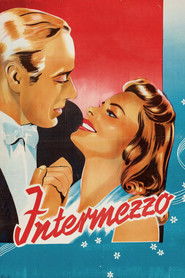
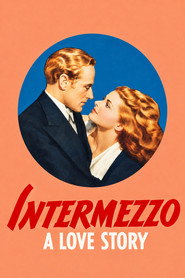
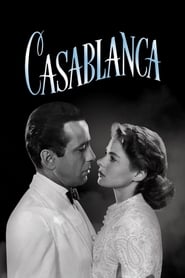
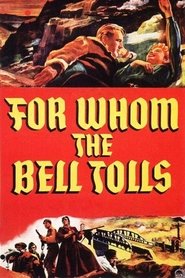
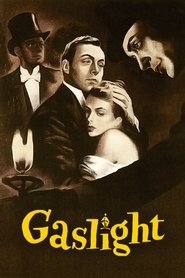
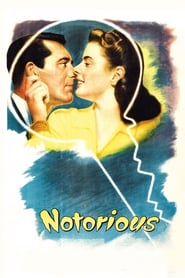
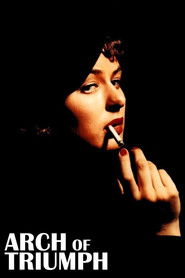
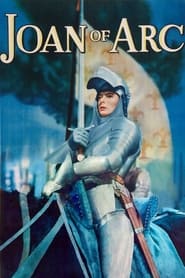
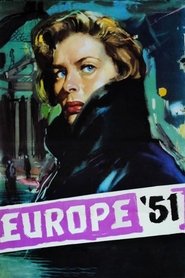
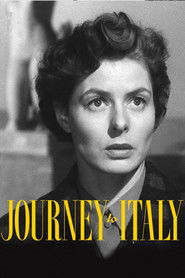
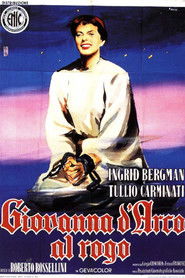
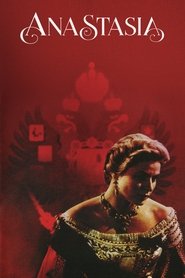
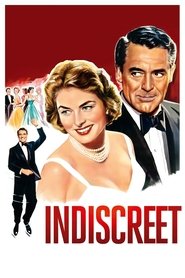
Ingrid Bergman (August 29, 1915 – August 29, 1982) was a Swedish actress who starred in a variety of European and American films, television movies, and plays. With a career spanning five decades, she is often regarded as one of the most influential screen figures in cinematic history. According to the St. James Encyclopedia of Popular Culture, upon her arrival in the U.S. Bergman quickly became "the ideal of American womanhood" and a contender for Hollywood's greatest leading actress. David O. Selznick once called her "the most completely conscientious actress" he had ever worked with. In 1999, the American Film Institute recognised Bergman as the fourth greatest female screen legend of Classic Hollywood Cinema. She won numerous accolades, including three Academy Awards, two Primetime Emmy Awards, a Tony Award, four Golden Globe Awards, BAFTA Award and a Volpi Cup. She is one of only four actresses to have received at least three acting Academy Awards (only Katharine Hepburn has four). Born in Stockholm to a Swedish father and a German mother, Bergman began her acting career in Swedish and German films. Her introduction to the U.S. audience came in the English-language remake of Intermezzo (1939). Known for her naturally luminous beauty, she starred in Casablanca (1942) as Ilsa Lund, her most famous role, opposite Humphrey Bogart. Bergman's notable performances in the 1940s include the dramas For Whom the Bell Tolls (1943), Gaslight (1944), The Bells of St. Mary's (1945), and Joan of Arc (1948), all of which earned her nominations for the Academy Award for Best Actress; she won for Gaslight. She made three films with Alfred Hitchcock: Spellbound (1945), with Gregory Peck, Notorious (1946), opposite Cary Grant and Under Capricorn (1949), alongside Joseph Cotten. In 1950, she starred in Roberto Rossellini's Stromboli, released after the revelation she was having an affair with Rossellini; that and her pregnancy prior to their marriage created a scandal in the U.S. that prompted her to remain in Europe for several years. During this time she starred in Rossellini's Europa '51 and Journey to Italy (1954), now critically acclaimed, the former of which won her the Volpi Cup for Best Actress. She had a successful return to working for a Hollywood studio in Anastasia (1956), winning her second Academy Award for Best Actress. Soon after, she co-starred with Grant in the romance Indiscreet (1958). In 1969, she starred in the acclaimed and highly successful film Cactus Flower. In later years, Bergman won her third Academy Award, this one for Best Supporting Actress, for her role in Murder on the Orient Express (1974). In 1978, she starred in Ingmar Bergman's (no relation) Swedish Autumn Sonata receiving her sixth Best Actress nomination. Bergman spoke five languages – Swedish, English, German, Italian and French – and acted in each. In her final role, she portrayed the late Israeli Prime Minister Golda Meir in the television miniseries A Woman Called Golda (1982) for which she posthumously won her second Emmy Award for Best Actress. In 1974, Bergman discovered she was suffering from breast cancer but continued to work until shortly before her death on her sixty-seventh birthday.
Trophy Case
Show all 15 award citations
- 1944WONGolden Globe Award for Best Actress – Motion Picture Drama — Gaslight
- 1944NomAcademy Award for Best Actress — For Whom the Bell Tolls
- 1945WONAcademy Award for Best Actress — Gaslight
- 1946NomAcademy Award for Best Actress — The Bells of St. Mary's
- 1949NomAcademy Award for Best Actress — Joan of Arc
- 1956WONGolden Globe Award for Best Actress – Motion Picture Drama — Anastasia
- 1957WONAcademy Award for Best Actress — Anastasia
- 1958NomBAFTA Award for Best Actress in a Leading Role — The Inn of the Sixth Happiness
- 1958NomGolden Globe Award for Best Actress in a Motion Picture – Musical or Comedy — Indiscreet
- 1958NomGolden Globe Award for Best Actress – Motion Picture Drama — The Inn of the Sixth Happiness
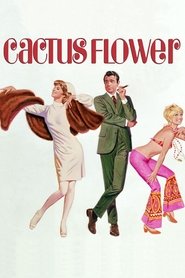
- 1969NomGolden Globe Award for Best Actress in a Motion Picture – Musical or Comedy — Cactus Flower
- 1974WONBAFTA Award for Best Actress in a Supporting Role — Murder on the Orient Express
- 1975WONAcademy Award for Best Supporting Actress — Murder on the Orient Express
- 1978NomGolden Globe Award for Best Actress – Motion Picture Drama — Autumn Sonata
- 1979NomAcademy Award for Best Actress — Autumn Sonata
Game Log
Count | Film | Character | Awards | |||||||||
|---|---|---|---|---|---|---|---|---|---|---|---|---|
| 1936 | Anita Hoffman | #2 billed | — | RT ↗ | MC ↗ | 65 | 0.5 | 0.0 | — | |||
| 1938 | Anna Holm | #1 billed | — | RT ↗ | MC ↗ | 70 | 0.8 | 0.0 | — | |||
| 1939 | Anita Hoffman | #2 billed | — | 100% | 74 | 66 | 0.6 | 1.0 | — | |||
| 1940 | Kerstin Norbäck | #1 billed | — | RT ↗ | MC ↗ | 60 | 0.4 | 0.0 | — | |||
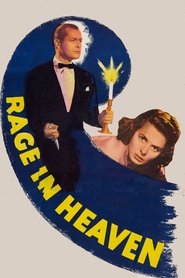
| 1941 | Ivy Peterson | #2 billed | $4M | 58% | MC ↗ | 68 | 1.0 | 0.2 | — | |||
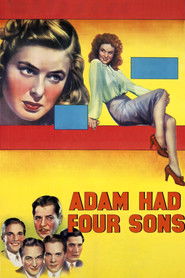
| 1941 | Stella Bergen | #2 billed | — | RT ↗ | MC ↗ | 64 | 0.5 | 0.0 | — | |||
| 1941 | Emilie Gallatin | #1 billed | — | RT ↗ | MC ↗ | 66 | 0.6 | 0.0 | — | |||
| 1943 | Ilsa Lund | #2 billed | $4M | 99% | 100 | 85 | 1.6 | 1.6 | — | |||
| 1943 | Maria | #2 billed | — | 69% | 68 | 68 | 0.6 | 2.5 | Oscar nom | |||
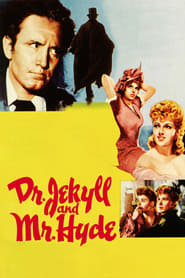
| 1944 | Paula Alquist | #2 billed | — | 94% | 78 | 78 | 1.0 | 7.2 | OscarGG | |||
| 1945 | Dr. Constance Petersen | #1 billed | — | 86% | 78 | 75 | 1.0 | 1.1 | — | |||
| 1945 | Sister Mary Benedict | #2 billed | $21M | 85% | MC ↗ | 72 | 4.0 | 2.7 | Oscar nom | |||
| 1945 | Clio Dulaine | #2 billed | — | RT ↗ | MC ↗ | 64 | 0.5 | 0.0 | — | |||
| 1946 | Alicia Huberman | #2 billed | — | 96% | 100 | 79 | 1.0 | 1.5 | — | |||
| 1948 | Joan Madou | #1 billed | — | RT ↗ | MC ↗ | 63 | 0.5 | 0.0 | — | |||
| 1948 | Joan of Arc | #1 billed | — | 82% | MC ↗ | 64 | 0.6 | 2.7 | Oscar nom | |||
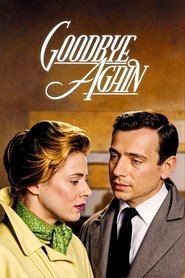
| 1949 | Lady Henrietta Flusky | #1 billed | — | 56% | 61 | 62 | 0.5 | 0.3 | — | |||
| 1950 | Karin Bjornsen | #1 billed | — | 67% | MC ↗ | 72 | 0.9 | 0.4 | — | |||
| 1952 | Irene Girard | #1 billed | — | RT ↗ | MC ↗ | 74 | 1.0 | 0.0 | — | |||
| 1953 | Ingrid (segment "Ingrid Bergman") | #1 billed | — | RT ↗ | MC ↗ | 65 | 0.6 | 0.0 | — | |||
| 1954 | Katherine Joyce | #1 billed | — | 96% | 100 | 72 | 0.9 | 1.7 | — | |||
| 1954 | Irene Wagner | #1 billed | — | RT ↗ | MC ↗ | 67 | 0.7 | 0.0 | — | |||
| 1954 | Joan of Arc | #1 billed | — | RT ↗ | MC ↗ | 57 | 0.3 | 0.0 | — | |||
| 1956 | Anna Koreff / Anastasia | #1 billed | — | 92% | MC ↗ | 70 | 0.8 | 7.2 | OscarGG | |||
| 1956 | Elena Sokorowska | #2 billed | — | 71% | MC ↗ | 62 | 0.4 | 0.5 | — | |||
| 1958 | Anna Kalman | #2 billed | — | 100% | MC ↗ | 68 | 0.6 | 1.4 | GG nom | |||
| 1958 | Gladys Aylward | #1 billed | — | 100% | MC ↗ | 72 | 0.9 | 2.1 | BAFTA nomGG nom | |||
| 1961 | Paula Tessier | #1 billed | — | 60% | MC ↗ | 70 | 0.8 | 0.3 | — | |||
| 1964 | Gerda Millett | #1 billed | — | RT ↗ | MC ↗ | 64 | 0.6 | 0.0 | — | |||
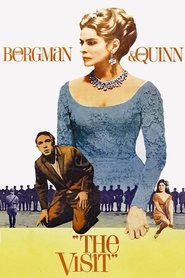
| 1964 | Karla Zachanassian | #1 billed | — | RT ↗ | MC ↗ | 74 | 1.0 | 0.0 | — | |||
| 1967 | Mathilde Hartman | #1 billed | — | RT ↗ | MC ↗ | 57 | 0.3 | 0.0 | — | |||
| 1969 | Stephanie Dickinson | #2 billed | — | 85% | 67 | 72 | 0.8 | 1.0 | GG nom | |||
| 1970 | Libby Meredith | #2 billed | — | RT ↗ | MC ↗ | 61 | 0.4 | 0.0 | — | |||
| 1973 | Mrs. Frankweiler | #3 billed | $0.1M | RT ↗ | MC ↗ | 62 | 0.4 | 0.0 | — | |||
| 1974 | Greta Ohlson | #4 billed | $28M | 89% | 62 | 72 | 1.1 | 4.4 | OscarBAFTA | |||
| 1976 | Contessa Sanziani | #2 billed | — | 50% | MC ↗ | 51 | 0.0 | 0.0 | — | |||
| 1978 | Charlotte | #1 billed | — | 85% | MC ↗ | 81 | 1.2 | 3.1 | Oscar nomGG nom |














How we measure: Only released feature films (40+ minutes) are counted — video box sets, compilations, shorts, documentaries, and upcoming releases are excluded unless award-recognized. Box office is the domestic (US & Canada) theatrical gross, and PACINO always adjusts it to 2026 dollars using historical US Bureau of Labor Statistics CPI-U annual averages (1913–2026) so stars from every era compete on equal footing. Overseas earnings are not counted, which can undersell stars whose biggest hits played mainly abroad. Reception blends critics (75% Metacritic, 25% Rotten Tomatoes, with RT-only films calibrated to that same blend) 50/50 with fans (IMDb user ratings). Click any film's PACINO score for its full breakdown. Figures come from public sources and can be incomplete, especially for older, foreign and smaller releases.